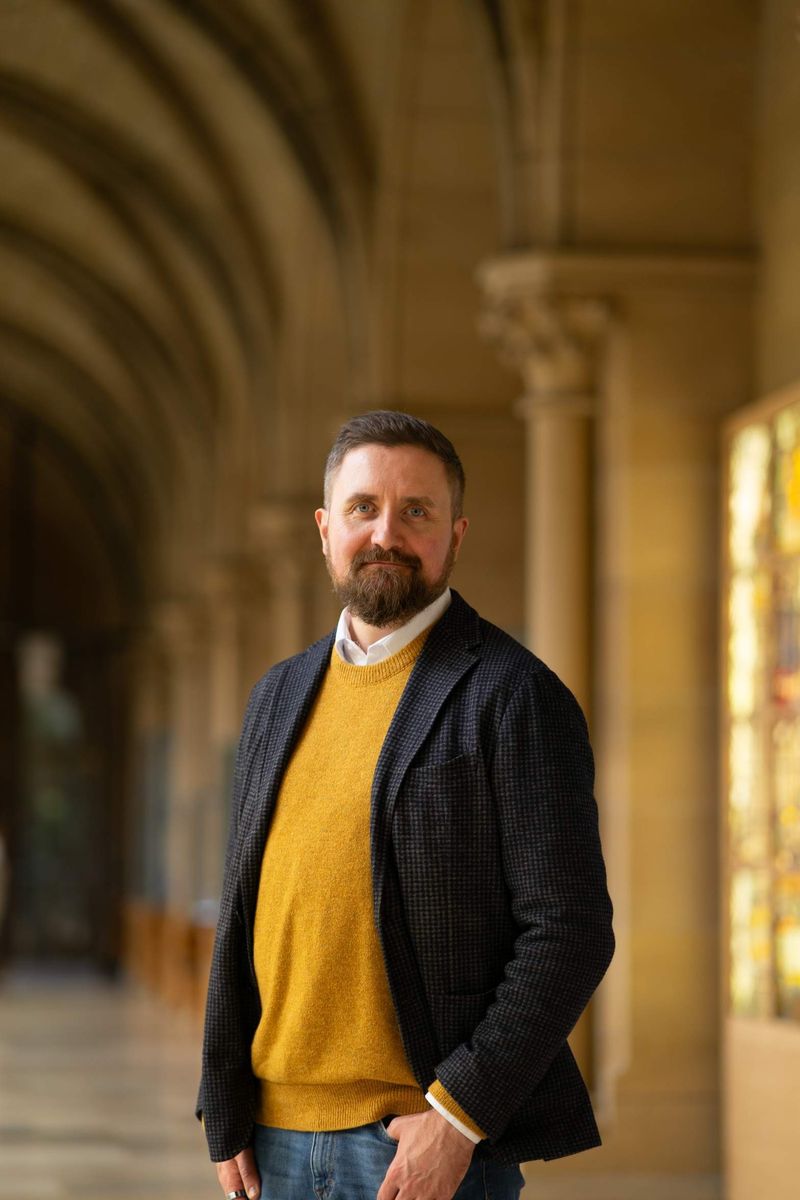
Pasi Eronen Watt in a stone arcade

Pasi Eronen Watt

Security policy analyst, advisor and author

I study how power, technology and information shape the global security environment, and what institutions and individuals alike can do about it.

I combine geopolitical analysis with practical work. My focus is on hybrid threats, foreign information manipulation and interference (FIMI), societal resilience, technological dependence and the security implications of emerging technologies. I can help with security policy advice, strategic threat analysis, comprehensive-security assessments, scenario exercises, and building AI-assisted analytical capability.

Formerly at the European External Action Service and in Finland’s defence establishment, with field deployments in Ukraine, Afghanistan and Kosovo. Co-author of Valheiden sota (2026). Based in Brussels and Helsinki.

Selected work

I am drawn to wicked problems that fall between established disciplines and institutional responsibilities, such as where technology meets security policy, or where analysis needs to drive a decision. Here are three places they have taken me.

Analyse | Build

European External Action Service (EUvsDisinfo)

Analysis and applied AI, 2021–2025

Together with the rest of our team, we analysed and exposed Russian information manipulation. From 2022, I drove the development of the team’s AI and language-model toolkit for analysis and content production, an early institutional adoption of generative AI. I also presented the EU’s work against foreign information manipulation at international conferences and expert forums.

Advise

Armenia’s Security Council Office

Comprehensive security, 2025–2026

As a senior expert with the EU Security Sector Governance Facility (GOPA PACE), I advised the Office’s staff, together with a colleague, on adapting Finland’s comprehensive security model to a national security and defence framework across eight strategic pillars. I commented on governance models and defence documents, and helped organise an international conference on comprehensive security with Nordic and Baltic experts.

In the field

Crisis management missions

OSCE, EU and NATO, 2009–2020

I have served with the OSCE Special Monitoring Mission to Ukraine in Donetsk and Kyiv, the EU police mission in Kabul, Afghanistan and NATO’s KFOR in Kosovo. These deployments gave me a view of policy in practice, situational awareness, decision-making and how organisations work under pressure.

Book

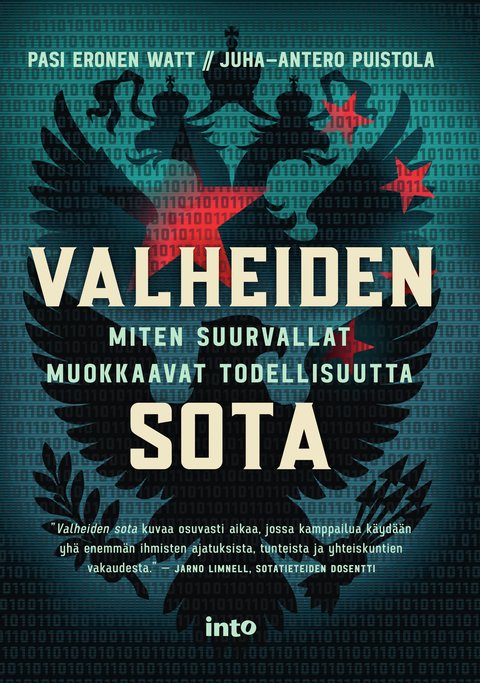
Cover of Valheiden sota by Pasi Eronen Watt and Juha-Antero Puistola, Into 2026

Valheiden sota

Miten suurvallat muokkaavat todellisuutta

War of Lies: How great powers shape reality (working English title). With Juha-Antero Puistola. Into Kustannus, June 2026.

The book’s own site: waroflies.eu in English, valheidensota.fi in Finnish

The power struggles of the future will increasingly be fought in minds before they show up on maps.

The authors, in the publisher’s launch announcement. Translated from Finnish.

Valheiden sota is about how great powers use information, technology and the shaping of perceptions as instruments of power. We look at Russian and Chinese information influence, and at the strong position of the United States in the digital landscape. The book also covers AI, the manipulation of the data that large language models draw on, and the question of who holds power over digital infrastructure.

It also asks how Finland and the rest of Europe can protect their open societies and their sovereignty in the AI age. Every actor has to be assessed with the same analytical rigour, even when their aims, methods and effects differ a great deal.

  • Perhaps no popular work on information warfare yet as accomplished as Valheiden sota.

    Pasi Huttunen, Kulttuuritoimitus, 20 August 2026

  • Sets out, matter-of-factly and directly, how Russia, China and the United States threaten Finland’s open society.

    Mari Manninen, Suomen Kuvalehti, 21 October 2026

  • Illuminates, successfully and above all clearly, where technology, psychology and security policy meet.

    Titta Lindström, Kirjavinkit, 18 August 2026

Reviews quoted in translation from Finnish; more reviews and events are on the book’s site. Available in print, as an e-book and as an audiobook; ISBN 978-952-393-735-2 (print).

Key arguments

Exposure is not enough

Identifying and exposing disinformation is necessary, but on its own it does not change the calculations of those who run influence operations. Responses must span domains and professions to deliver the impact on adversaries more effectively. They must be lawful, proportionate and democratically overseen. The aim is not a showy counter-strike but to make interference harder, and more costly, for those behind it.

AI also shifts power

AI can strengthen information influence and its detection alike. But the question is larger than disinformation. Who controls language models and their training, compute, cloud services and access to them? How far can other states and organisations come to depend on the decisions of a few providers, and their leadership? These are questions of security and power.

Then and now

Two threads I keep coming back to, years apart: what I wrote then, and whether it still holds.

Donetsk

“…these parts of the country look back at [a] glorified version of a history that never was.”

2021

Revisited November 2026

In 2021 I described occupied Donetsk as I had seen it: Russian flags and roubles, pressure to take Russian passports, busts of separatist leaders beside the Second World War memorial, and billboards and murals celebrating fallen war criminals. I wrote it while the conflict was still called ‘frozen’, and it was no forecast of the full-scale invasion that came less than a year later. The observations hold well, but my reading of them changed. Then they looked like the trappings of a frozen conflict. After 2022 they read as groundwork. A territory being prepared, in symbols and in daily life, to belong to Russia. My 2026 book interview returns to them with that reading.

  1. 2021

    Eastern Ukraine under foreign rule looks towards history that never was

    Baltic Rim Economies. Daily life, propaganda and dependence on Russia in occupied Donetsk.

  2. 2026

    Information influence in occupied Donetsk

    LinkedIn. Observations from 2019–2020 on propaganda in public space, memorials and the presentation of violence.

Trusting information

“Even though it sounds odd, ‘mere’ theft is far preferable to massive data corruption.”

2015, with Jani Antikainen

Revisited November 2026

More than a decade ago, Jani and I argued that losing trust in information could be more damaging than losing the information itself. I still think that is right. What has changed is the sheer scale of the problem. Generative AI has made the reliability of information, and the infrastructure through which we access it, an even more consequential question of security and power. What I am less sure of is whether verification can keep pace.

  1. 2015

    What’s Worse Than Losing Your Data? Losing Your Trust in It

    Overt Action, with Jani Antikainen.

  2. 2018

    Information: The Final Frontier of Cybersecurity

    OODA Loop, with Jani Antikainen and Miko Eklöf. Why manipulating critical information can do more harm than stealing it.

  3. 2024

    Countering Disinformation and Foreign Interference at the Time of Artificial Intelligence

    Cyberwatch Finland Magazine. Generative AI, information manipulation and possible countermeasures.

About

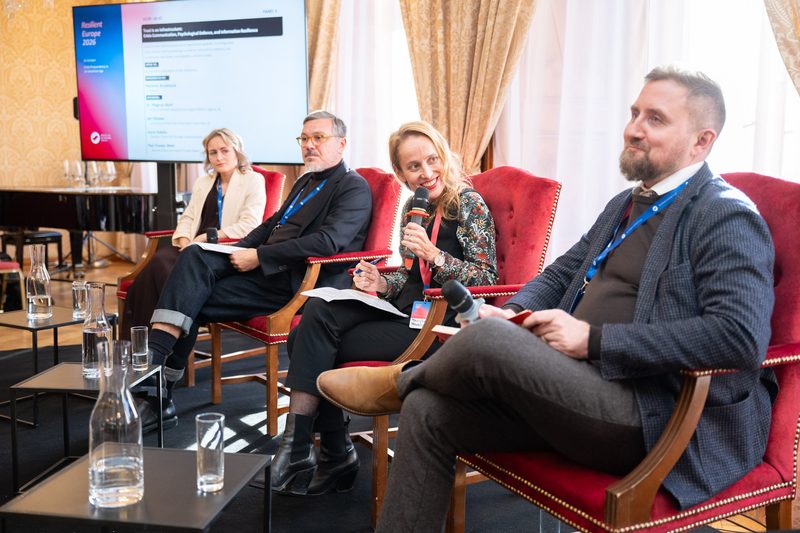
Pasi Eronen Watt, right, on a conference panel in Prague, with the other speakers and the moderator in red armchairs
On the panel “Trust Is an Infrastructure” at Resilient Europe 2026, Prague, 22 October 2026. Photo: Vaclav Bacovsky.

I started in computer science and technology consulting, and moved from there into security policy, field missions, and the practical adoption of AI.

I have written about security, information influence and international politics for more than a decade, in pieces published by CNN Opinion, Quartz and the New York Post, among others, and I have been quoted by The Wall Street Journal, Bloomberg, Axios, Foreign Policy and Yle. My recent co-authored book, Valheiden sota (2026), brings part of that work together. I also write about how AI, technological dependencies and great-power competition are challenging national sovereignty and security.

I hold an MA in Security Studies from Georgetown University and an MSc in Computer Science from the University of Joensuu. I am a Marshall Memorial Fellow of the German Marshall Fund (2022) and a reserve officer in the Finnish Defence Forces. Work published before my change of name appears under Pasi Eronen.

  • 2026–

    Global Center for Democratic Resilience Senior Fellow

  • 2025–

    Mission Grey Advisor and private investor

  • 2025–2026

    GOPA PACE, EU Security Sector Governance Facility, Armenia Senior expert

  • 2021–2025

    European External Action Service, East StratCom Task Force Policy officer, seconded by Finland

  • 2020–2021

    Secretariat of the Security Committee, Finland Senior researcher

  • 2019–2020

    OSCE Special Monitoring Mission to Ukraine, Kyiv and Donetsk Monitoring officer

  • 2017–2018

    Technology Industries of Finland Chief of preparedness

  • 2015–2018

    Foundation for Defense of Democracies, Washington D.C. Project researcher

  • 2015–2017

    Ministry of Defence, Finland Senior advisor

  • 2015

    Geneva Centre for Security Policy Executive-in-residence

  • 2013–

    Independent consultant Analysis, advice, speaking and teaching

  • 2006–2012

    Accenture, EUPOL Afghanistan, NATO KFOR in Kosovo Data management consulting and field missions

Contact

Get in touch about advisory and expert assignments, research collaboration, writing and speaking. I work in English and Finnish.

Message
On LinkedIn: linkedin.com/in/peronen
Speaking
Biographies, portrait and topics are in the media kit.